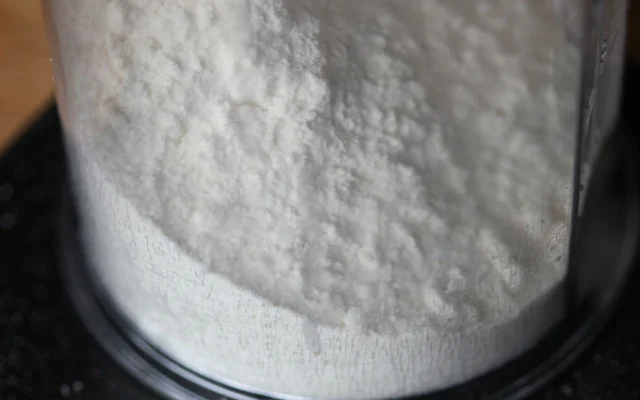
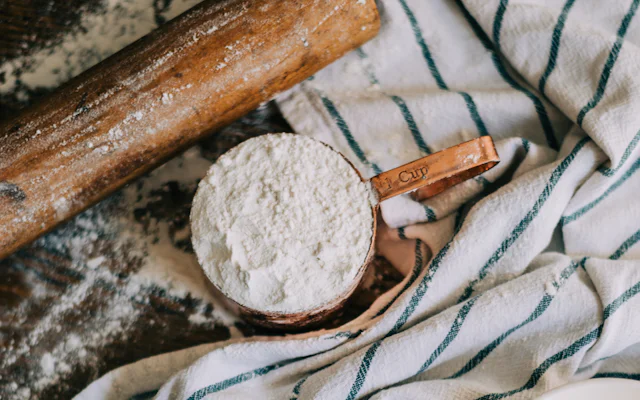
If your cookies spread less than the photo, your bread feels like a brick, or your cake comes out dry no matter how carefully you follow the recipe, there's a good chance the problem started before anything went into the bowl. Flour is the ingredient home bakers mismeasure most, and it's also the one that matters most.
The 30% problem
Flour compacts. When you push a measuring cup into the bag and drag it out, you press the flour down and pack far more into the cup than the recipe writer intended. The same "1 cup" can land in very different places:
| How the cup was filled | Typical weight (all-purpose) |
|---|---|
| Sifted, then spooned in | ~110 g |
| Spooned in and levelled | ~120–125 g |
| Scooped straight from the bag | ~140–150 g |
That's a difference of more than 30% between the lightest and heaviest cup. In a cookie recipe with 2¼ cups of flour, scooping can add around 60 g of extra flour, roughly another half cup. The dough gets stiff, the cookies don't spread, and they bake up dry and cakey.
The spoon-and-level method
If you don't have a scale, this is the most reliable way to measure flour by volume:
- Fluff the flour. Stir the flour in its bag or container with a spoon to loosen it up.
- Spoon it into the cup. Lightly spoon flour into the measuring cup until it's heaped above the rim. Don't tap or shake the cup, which packs it down.
- Level it off. Sweep the flat back of a knife across the top to remove the excess.
Use dry measuring cups (the kind you fill to the brim), not a liquid measuring jug. A jug makes it impossible to level the top, so you end up guessing at the line.
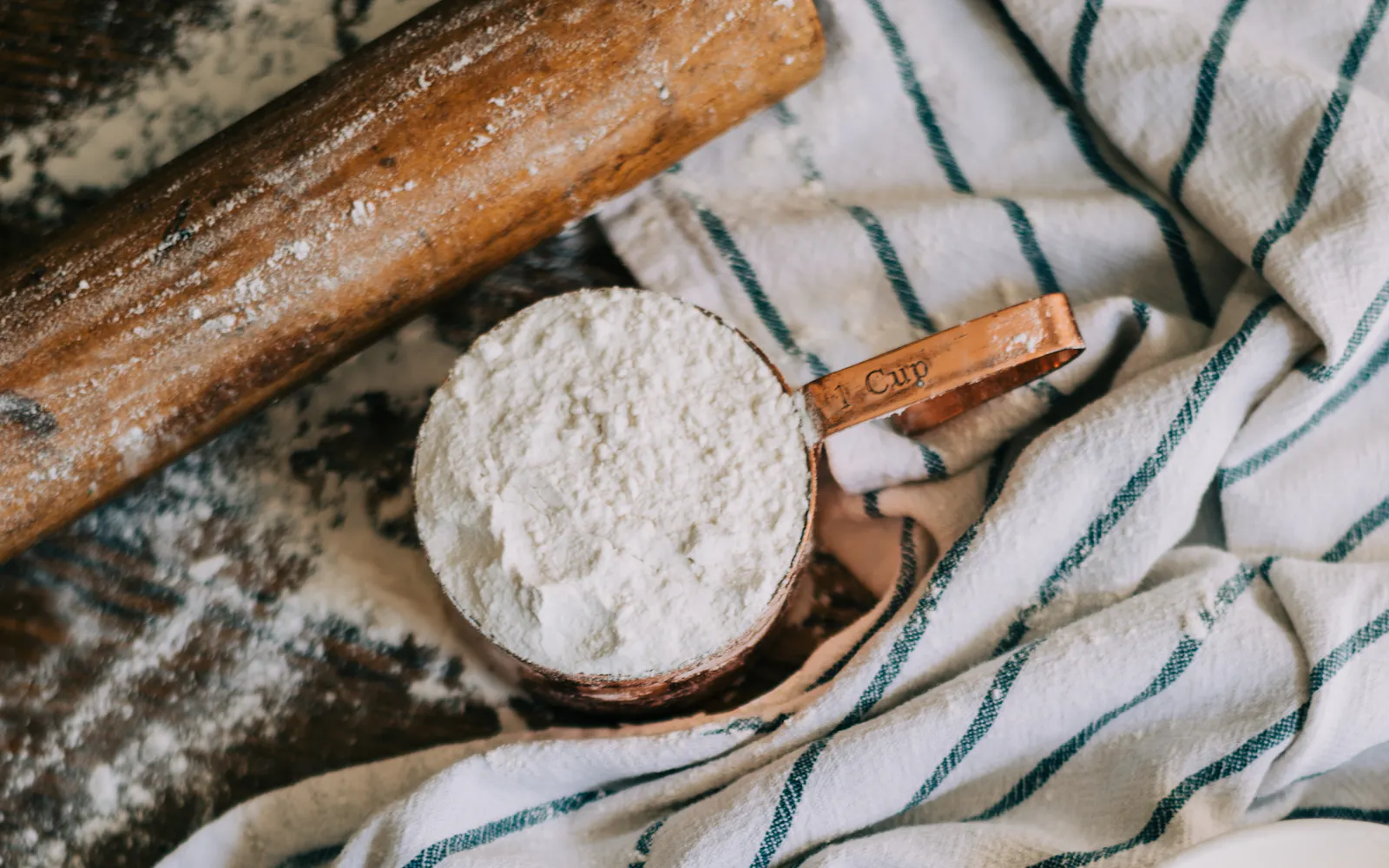
Why weighing beats both
A gram is a gram no matter how you scoop it. A digital kitchen scale removes every variable above, and it's faster too: put the bowl on the scale, press tare (zero), and pour until you hit the number. No cups to wash.
Weighing also makes scaling recipes trivial. Doubling 125 g is easier than doubling "1 cup plus 2 tablespoons," and it's exact. If a recipe only lists cups, our cups to grams converter gives you the weight for the specific ingredient, then our recipe scaler resizes everything.
How much does a cup of flour weigh?
Different flours have different densities. These are spoon-and-level weights for one US cup:
| Flour | Grams per cup | Ounces per cup |
|---|---|---|
| All-purpose flour | 120 g | 4.2 oz |
| Bread flour | 127 g | 4.5 oz |
| Cake flour | 114 g | 4.0 oz |
| Whole wheat flour | 113 g | 4.0 oz |
Different publishers list slightly different figures (some use 125 g or even 130 g for all-purpose). The gap between those sources is small; the gap between spooning and scooping is not.
Five common flour mistakes
1. Scooping from the bag
The big one, covered above. If you do nothing else, switch to spooning.
2. Tapping the cup to level it
Tapping settles the flour and makes room for more. Level with a straight edge instead.
3. Ignoring "sifted"
"1 cup sifted flour" (sift, then measure) is lighter than "1 cup flour, sifted" (measure, then sift). The comma matters.
4. Swapping flours one-for-one by volume
Whole wheat flour absorbs more water than white flour. If you swap it in, expect a stiffer dough and add a splash more liquid.
5. Using a liquid jug for dry ingredients
Jugs are designed for liquids that find their own level. Flour doesn't, so a jug gives you a rough guess at best.
The best $20 you'll spend on baking
Any digital scale that reads in 1 g steps and has a tare button will do. See top-rated kitchen scales →
As an Amazon Associate, KitchenArithmetic earns from qualifying purchases. This costs you nothing extra.

We build free kitchen calculators and test the numbers behind them. Spotted something off? Tell us.