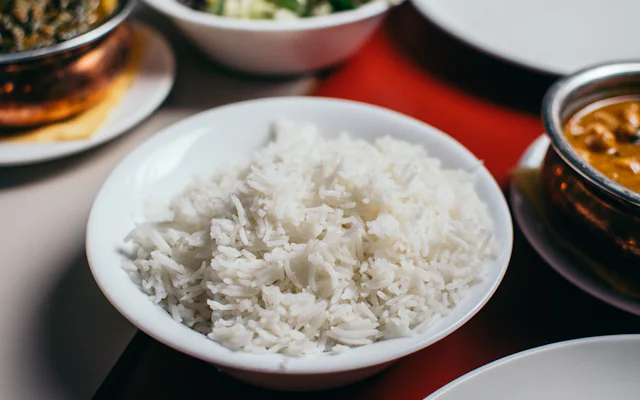
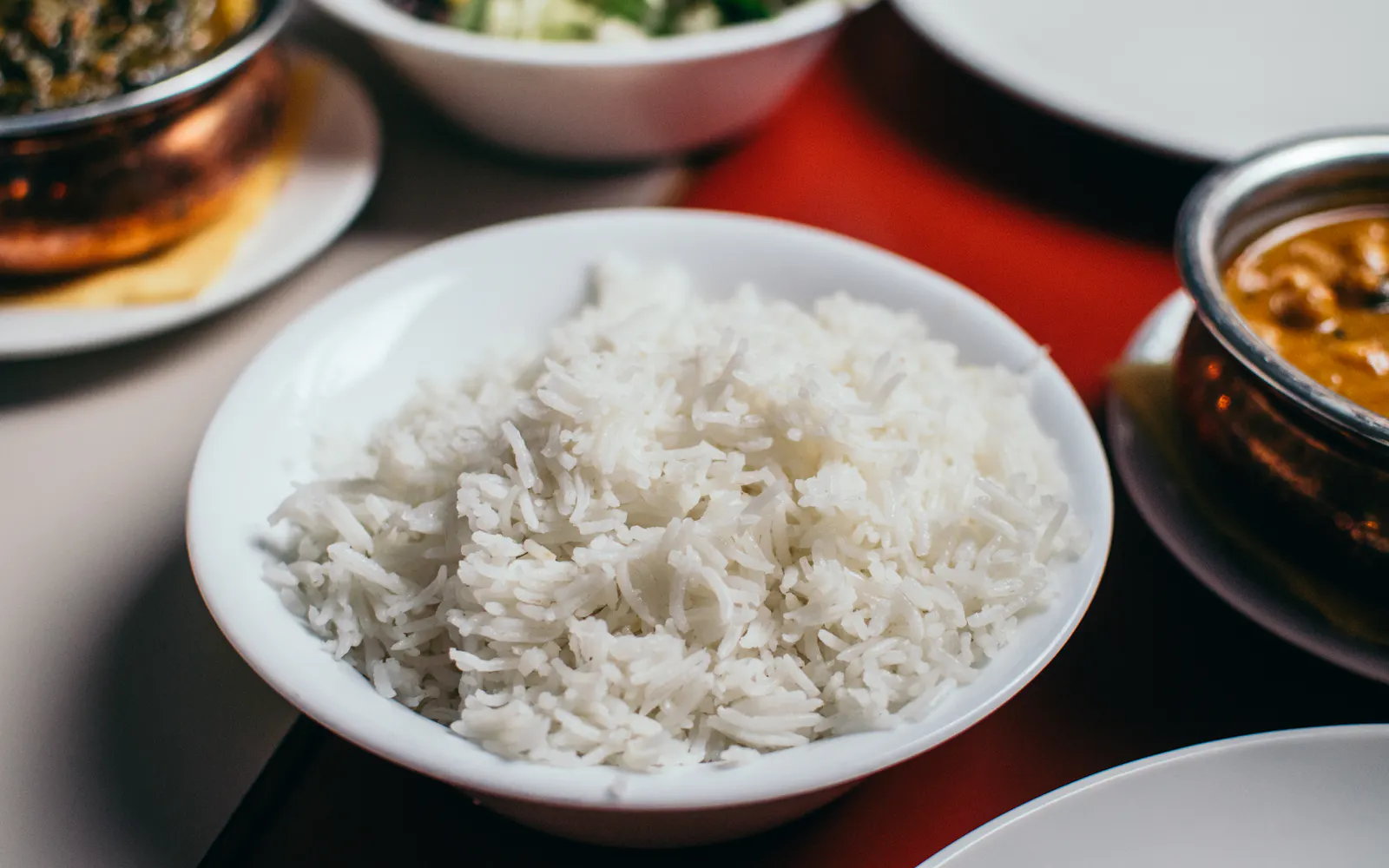
Rice is two ingredients, yet it goes wrong all the time: gluey, crunchy, scorched or soupy. Almost every failure comes down to three things: the wrong amount of water, heat that's too high, or lifting the lid. Get those right and stovetop rice is easy.
The basic method
- Measure the rice and water with the same cup. Use our rice to water ratio calculator to get both amounts for the number of people you're feeding.
- Rinse the rice in a fine sieve under cold water for 30–60 seconds, until the water runs mostly clear. (Skip this for risotto.)
- Bring the water to a boil in a heavy-bottomed pot with a pinch of salt (about ½ teaspoon per cup of rice).
- Add the rice, stir once, and bring it back to a simmer.
- Cover tightly and turn the heat to the lowest setting. Simmer for the time in the chart below. Don't lift the lid.
- Take it off the heat and rest it, covered, for 10 minutes. Then fluff with a fork.
Water ratios by rice type
| Rice (1 cup) | Water | Simmer |
|---|---|---|
| Long-grain white | 2 cups | 18 min |
| Jasmine | 1½ cups | 15 min |
| Basmati | 1½ cups | 15 min |
| Short-grain / sushi | 1¼ cups | 15 min |
| Parboiled | 2¼ cups | 20 min |
| Long-grain brown | 2½ cups | 40–45 min |
| Wild rice | 3 cups | 45–55 min |
These are reliable starting points for the stovetop. Brands vary a little, so if your rice comes out slightly too firm or soft, adjust the water by 2 tablespoons next time and write it down.
Why each step matters
Rinsing washes off loose surface starch. Left on, that starch turns into glue and makes the grains clump. It matters most for jasmine, basmati and sushi rice.
Low heat with the lid on lets the rice steam gently. High heat boils the water off before the grains have absorbed it and scorches the bottom.
Not peeking keeps the steam in. Every lift of the lid lets out water you measured carefully, which leaves the top layer undercooked.
Resting lets moisture even out through the pot. The bottom stops being wet and the top finishes cooking.
Fixing common rice problems
| Problem | Likely cause | Fix |
|---|---|---|
| Mushy or gummy | Too much water or not rinsed | Next time use 2–4 tbsp less water and rinse. Now: spread on a tray to steam off. |
| Crunchy in the middle | Too little water or lid lifted | Add 2–3 tbsp hot water, cover and cook 5 more minutes on low. |
| Burnt on the bottom | Heat too high or thin pot | Don't scrape the burnt layer. Spoon out the good rice from the top. |
| Wet on the bottom, dry on top | Skipped the rest | Rest 10 minutes covered before fluffing. |
The pot makes a difference
A heavy-bottomed saucepan with a tight-fitting lid spreads heat evenly and stops scorching. See saucepans →

We build free kitchen calculators and test the numbers behind them. Spotted something off? Tell us.